Dotonbori Food Tour Osaka
Tours & tickets

Hand-picked by our editors — only the best 5 night food experiences from 23 reviewed.

Open today 00:00–23:59
Attendance: Moderate — summer season
Outdoor stalls are most active during evening hours.
Instant confirmation Mobile voucher Free cancellation Verified local guides Skip-the-line
Tickets

Choose your ticket

Verified partners for every tour, free cancellation where available, and instant confirmation on every booking.

Shinsekai Street Food Night Tour 3 hr
Standard Entry

Shinsekai Street Food Night Tour

4.9 (1814)
€61
per person
Instant Mobile voucher Flexible — change up to 24h

Dive into Osaka's retro food district with 15 authentic tastings, 3 drinks, and hidden local spots

Reserve
Shinsekai Street Food Walk: 17 Tastings & Local Stories 3 hr
Standard Entry

Shinsekai Street Food Walk: 17 Tastings & Local Stories

4.8 (403)
€46
per person
Instant Mobile voucher Flexible — change up to 24h

Eat your way through Osaka's nostalgic Shinsekai district with a local guide and 17 authentic bites.

Reserve

Prices from verified partners. Availability updates in real time at checkout. Free cancellation policies apply where shown.

Highlights

What you'll see inside the attraction

The landmarks, rooms, and views travelers on this tour remember — all visible on a single visit.

Tsutenkaku Tower

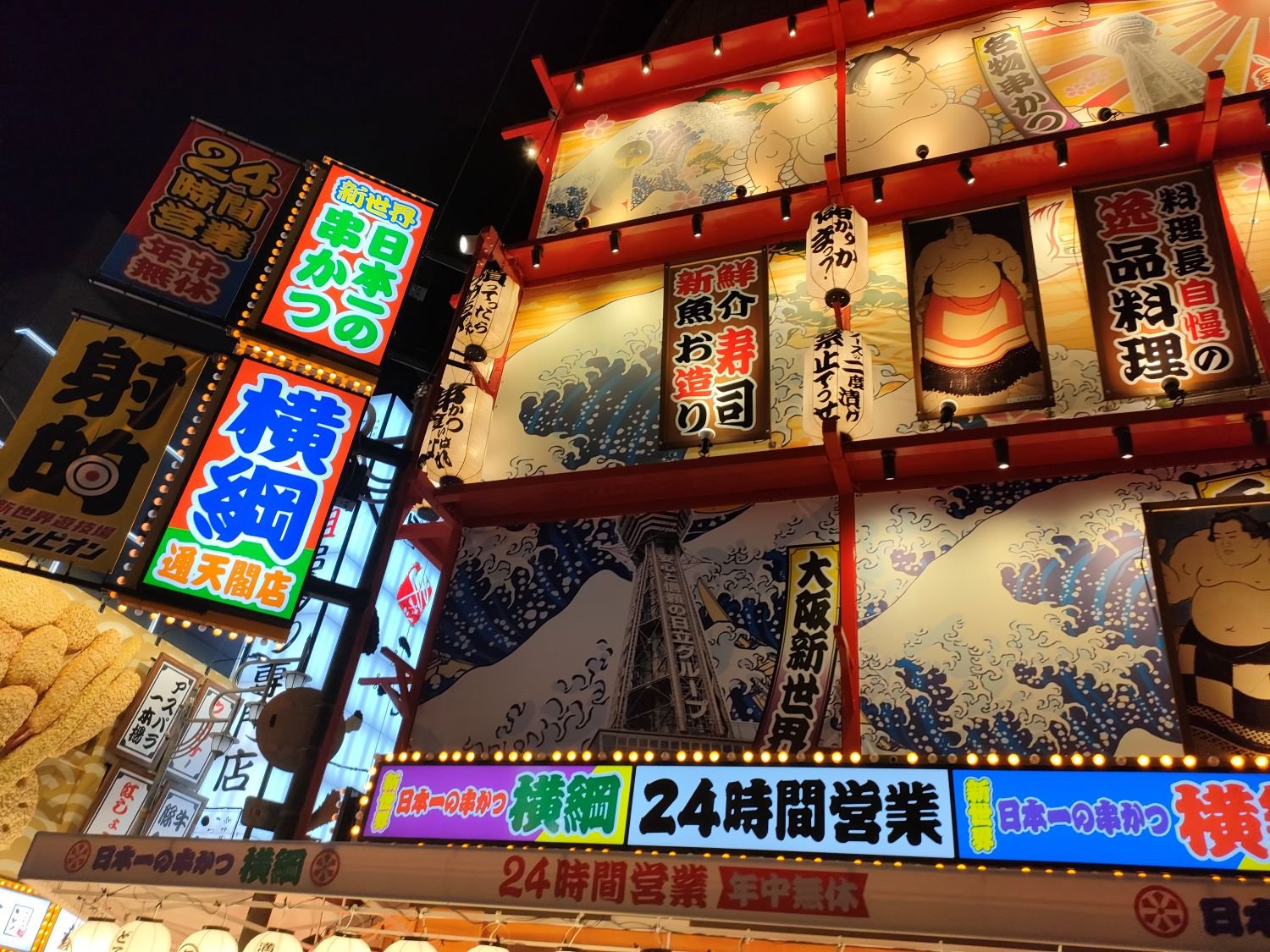
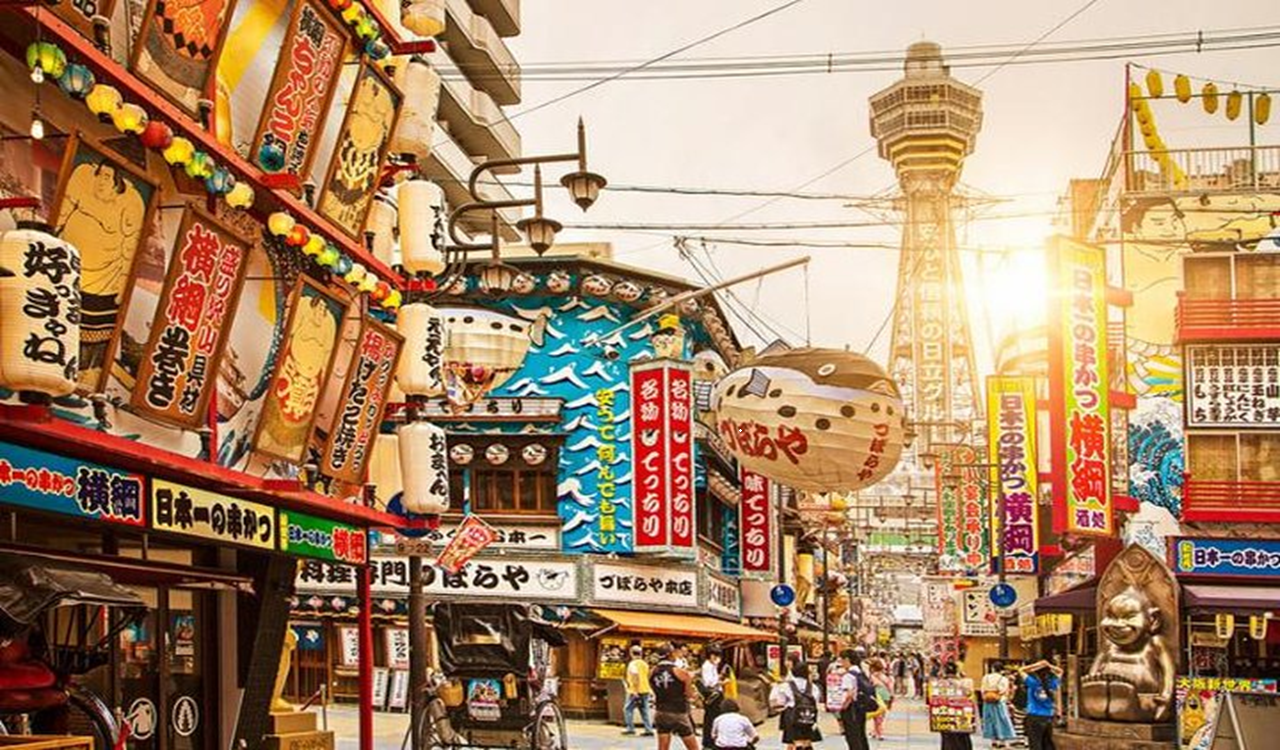
A 103-meter retro landmark representing the heart of the Shinsekai district. Built in 1912, it offers iconic views of the neighborhood and neon lights.

Janjan Yokocho

This historic shopping alley is known for its authentic Showa-era atmosphere and hidden eateries. It spans several blocks and remains a hub for local laborers and foodies.

Shinsekai Market

This revitalized shopping arcade features quirky stalls and street food vendors. It has been transformed into a lively community space while maintaining vintage charm.

Billiken Statue

A beloved charm of the Shinsekai area, visitors often rub the feet of this statue for good luck. You will find replicas throughout the local shops.

Dotonbori Canal

The iconic neon-lit canal famous for its giant crab signs and the Glico Man billboard. It serves as the vibrant center of Osaka's culinary scene.

Head to head

Guided Osaka Food Tour Night vs. Self-Guided Exploration

They complement each other; most visitors who do both find that an osaka food tour night offers superior narrative depth, while self-guided wanderings provide unmatched freedom.

Feature Top pick Guided Night Tour Self-Guided Shinsekai
Structure and Curation
Social Experience
Cost
Navigational Ease
Local Insight Access
Logistical Support

Verdict: Choose the osaka food tour night tour if you prioritize curated local storytelling, or opt for the self-guided approach to enjoy flexible osaka food tour night tickets at your own pace.

How your ticket works

Book your ticket in 3 steps

  1. 01

    Book online

    Choose your ticket, select your date, and reserve in under two minutes. Secure checkout handled by our verified partner.

  2. 02

    Receive your mobile voucher

    Instant confirmation by email, with a mobile voucher you can save offline. No printing, no queuing at a collection desk.

  3. 03

    Show & enter

    Arrive at the entrance, show your voucher on your phone, and walk in. Most tickets include priority or skip-the-line access.

Plan your visit

Everything you need to know before you go

Practical details for your visit straight from our verified partners — hours, access, rules, and how to get there.

Open today · 00:00–23:59
Opening hours
00:00–23:59
Address
Shinsekai, Naniwa Ward, Osaka, Japan
Accessibility
Varies by venue; narrow alleys may limit access
Best arrival window
18:00–21:00
Bags and security
Minimal storage; avoid large suitcases
Entrance fee
0 JPY
Mon
00:00–23:59
Tue
00:00–23:59
Wed
00:00–23:59
Thu
00:00–23:59
Fri
00:00–23:59
Sat
00:00–23:59
Sun
00:00–23:59
Location

Address
Shinsekai, Naniwa Ward, Osaka, Japan
Bags and security
Minimal storage; avoid large suitcases
Entrance fee
0 JPY

Dress code

Casual and comfortable clothing is recommended. Wear supportive walking shoes as the osaka food tour night involves navigating uneven alleyways.

Bags & security

Keep belongings minimal. Most venues on the osaka food tour night route have limited space and cannot accommodate large luggage or backpacks.

Photography

Photography is generally permitted in public areas. Always ask for permission before taking photos of shop staff or inside private eateries during your osaka food tour night.

Accessibility

Some areas of the osaka food tour night are located in historic, narrow alleys which may not be wheelchair accessible. Contact your operator in advance to discuss specific needs.

What to bring

  • Comfortable shoes
  • Cash for extra drinks
  • Portable power bank
  • Water bottle
  • Umbrella for rain
  • Valid ID for drinking age verification

Not allowed

  • Glass bottles
  • Large suitcases
  • Tripods
  • Illegal substances
  • Drones
  • Dangerous goods
  • Open alcohol containers
  • Professional recording equipment

Families & strollers

All ages are generally welcome on the osaka food tour night. Please ensure children are included in the total booking headcount for planning purposes.

Food & drink

The osaka food tour night showcases local specialties like takoyaki and kushikatsu. Inform your guide of any dietary restrictions at the time of booking.

Around your visit

Everything else worth knowing

Best time to go, insider tips, nearby landmarks, and the cancellation fine print — flip through to skim what matters to you.

Cancellation policy

Flexible, no hidden fees.

Full refunds are typically provided for cancellations made at least 24 to 72 hours before the tour start time. Please verify specific operator terms as conditions vary for each osaka food tour night.

About

The place, in context

Osaka's yatai culture began in the Edo period, when itinerant vendors pushed wooden carts through theatre districts, frying batter and grilling skewers for audiences leaving kabuki performances. By the 1920s, Shinsekai had become the city's working-class entertainment quarter, its narrow lanes dense with kushikatsu stands where diners sat elbow-to-elbow at zinc counters. The double-frying prohibition — sauce once, never twice — originated here as a hygiene compact among postwar vendors, and the rule still governs every kushikatsu-ya in the district. Dotonbori's neon corridor emerged in parallel, its riverfront promenade anchored by the mechanical crab that has rotated above Kani Dōraku since 1960. The neighbourhood's takoyaki lineage traces to a single stall opened in 1935 by Tomekichi Endo, who adapted akashiyaki by adding cabbage and ginger, then served the spheres in disposable wooden boats. Today, an osaka food tour night threads these two geographies, moving from Shinsekai's retro lantern glow to Dotonbori's digital glare. The format reflects Osaka's kuidaore philosophy — "eat until you drop" — a term coined in the 1920s to describe the city's competitive generosity with food. Guides are typically Osaka natives who grew up in Naniwa Ward or Chūō, their knowledge rooted in childhood routines rather than culinary training. They navigate by landmark rather than map: the Tsūtenkaku Tower, the Glico Running Man, the Hozenji Temple alcove where diners pause to ladle water over a moss-covered Fudō Myōō statue before entering nearby izakayas. Evening is the structural hour. Yatai operators arrive at dusk to prep charcoal grills and batter stations; by 18:00 the first skewers are frying. The Osaka evening food tour format typically spans two to three hours, with seven to seventeen tastings depending on route density. Portions are designed for grazing — two takoyaki per guest, one kushikatsu skewer, a shared plate of okonomiyaki — so the cumulative intake mirrors a full kaiseki sequence. The pedagogical layer matters as much as the food itself: why Kansai okonomiyaki is griddled in a single pour while Hiroshima-style is layered, why doteyaki beef tendon simmers for six hours in miso, why the golden broth in Osaka udon is paler and sweeter than Tokyo's dark tsuyu. These are oral-tradition details, passed cook to cook, now codified in the two-hour osaka food tour night walk that has become the city's most efficient vector for edible context.

"The double-frying prohibition — sauce once, never twice — originated here as a hygiene compact among postwar vendors, and the rule still governs every kushikatsu-ya in the district."
Your experience

What a tour day looks like

A step-by-step walkthrough of the visit — what you'll see, how long each stage takes, and the details that matter.

You meet your guide near Tsūtenkaku Tower as the sky softens to indigo and the retro neon of Shinsekai flickers on. The first stop is a kushikatsu counter where you stand at the rail, no chairs, and dip battered skewers — lotus root, quail egg, pork belly — into a communal sauce pot exactly once. The oil temperature holds at 180°C; the crust shatters audibly. Your guide explains the postwar origins of the no-double-dip rule while the chef fries your next round. You walk five minutes south to a takoyaki stall where the octopus is diced that morning at Kuromon Market, the batter poured into cast-iron molds and flipped with steel picks in a rhythm so practiced it sounds like drumming. You eat them from a paper boat, bonito flakes writhing in the steam. The route shifts east toward Dotonbori. You cross the bridge under the Glico sign, its runner frozen mid-stride above the canal, and descend into a covered arcade where your guide orders okonomiyaki cooked on a teppan gridded with decades of seasoning. The chef pours the batter in one motion, no folding, and you watch the surface bubble and set. You finish at a standing bar with two drinks — local Asahi or a plum sour — and a plate of doteyaki, the beef tendon so tender it yields to chopstick pressure. The entire walk covers less than two kilometres, but you've eaten twelve dishes and heard the lineage behind each one.

Frequently asked

Frequently asked questions about osaka food tour night tours

What are the opening hours for an osaka food tour night?

Public street areas in Shinsekai are open 24 hours (00:00–23:59), though specific guided tours run on schedules starting in the evening.

Is the osaka food tour night accessible for wheelchair users?

Accessibility varies; many narrow alleys on an osaka food tour night are not wheelchair-friendly. Please contact your operator regarding specific mobility needs.

What should I bring on an osaka food tour night?

Bring comfortable walking shoes, a bottle of water, and some extra cash for additional drinks during your osaka food tour night.

Are children allowed on these food tours?

Yes, children are welcome on most tours, but they must be included in the total headcount when booking your osaka food tour night.

Can I book osaka food tour night tickets on the day of arrival?

It is highly recommended to book your osaka food tour night tickets in advance due to high demand and limited group sizes.

What happens if it rains during my osaka food tour night?

Tours typically proceed rain or shine, so dress accordingly for the weather during your osaka food tour night.

Are there vegetarian options available on the tour?

Many operators can accommodate dietary needs, but you must specify these at the time of booking your osaka food tour night.

How do I reach the meeting point for my osaka food tour night?

Most meeting points are near major stations like Dobutsuen-mae or Namba; check your specific voucher for the exact location of your osaka food tour night.

Is the entrance fee for the osaka food tour night included?

The entrance fee for public street areas is 0 JPY, and your tour fee covers your curated tastings and guide services.