
English| EUR
Suggested for you
More currencies
Choose a language
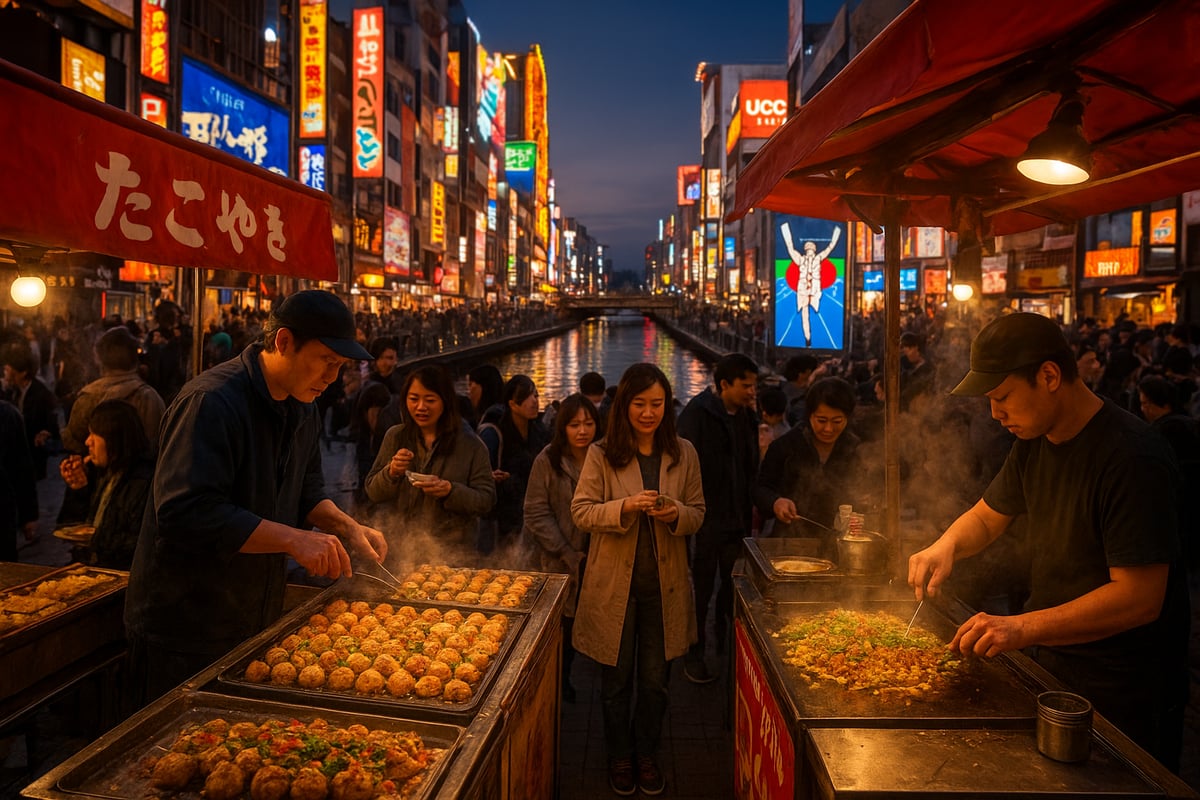
Dotonbori is Osaka's street food capital, a neon-lit canal district where takoyaki grills hiss, okonomiyaki sizzles on iron griddles, and kushikatsu vendors serve skewers by the dozen. The neighborhood runs 24 hours, and its culinary identity—rooted in kuidaore, the Osaka philosophy of eating until you drop—defines what visitors come to taste.
Quick answer
Dotonbori's essential dishes are takoyaki (octopus-filled batter balls), okonomiyaki (savory cabbage pancakes), kushikatsu (deep-fried skewers), tonkotsu ramen, and grilled seafood. The district operates around the clock with free public access, and the peak dining window between 17:00 and 22:00 brings the full neon atmosphere and the highest concentration of open stalls and specialty counters.
Dotonbori produces more takoyaki per square meter than any other district in Japan. The canal-side stretch between Ebisubashi Bridge and Tazaemonbashi Bridge holds over sixty food vendors, many operating from the same stall sites their founders claimed in the 1950s. The mechanical crab at Kani Doraku and the running Glico Man sign frame a culinary corridor where Osaka's unofficial motto—kuidaore, or "eat yourself bankrupt"—plays out in real time. What to eat in Dotonbori starts with takoyaki, the octopus-filled spheres cooked in cast-iron molds and brushed with a sweet-savory tare sauce. Kukuru and Aizuya anchor the takoyaki landscape, each claiming a different origin story. Okonomiyaki follows: a dense, layered pancake of cabbage, batter, pork, and toppings griddled to order at counters where diners sit inches from the cooking surface. Kushikatsu—battered and fried skewers of meat, seafood, and vegetables—arrives with a single dipping rule: no double-dipping in the communal tonkatsu sauce. The Dotonbori food scene operates without a closing hour. Ramen shops serve tonkotsu and shoyu broths past midnight, grilled scallop vendors work the pedestrian arcade until dawn, and conveyor-belt sushi counters cycle nigiri under glass around the clock. The district sits in Chuo Ward at 542-0071, accessible from Namba Station on six separate rail lines. Evening arrival between 17:00 and 22:00 delivers the iconic neon glow and the full roster of open kitchens, but the all-night service window means Osaka's culinary specialties remain within reach regardless of when hunger strikes. Dotonbori's food identity is inseparable from its geography. The Dotonbori Canal, dug in 1612, created a theater district that fed actors and audiences alike, and the eating culture that emerged—fast, cheap, flavorful, and abundant—became the template for modern Osaka cuisine. The mechanical signage, the open-front stalls, and the shoulder-to-shoulder density all serve the same function: turning eating into spectacle, and spectacle into appetite.
“Dotonbori produces more takoyaki per square meter than any other district in Japan.”
Dotonbori serves as the center of Osaka's food culture, where street vendors and specialized restaurants occupy nearly every storefront along the canal. While the main strip features high-visibility stalls, visitors often find more diverse seating and lower prices by stepping into the alleys just north of the Dotonbori River.
street
Specializes in takoyaki, featuring octopus balls with a soft, creamy center located directly on the main Dotonbori promenade.
restaurant
A long-standing okonomiyaki establishment located on the main street known for its mountain yam batter.
restaurant
Serves deep-fried skewers of meat and vegetables, with a notable presence near the Dotonbori bridge.
market
A narrow, stone-paved alleyway south of the main canal offering smaller, traditional restaurants and quiet atmosphere.
The best arrival window is 17:00–22:00, when the district displays its iconic neon lights and reaches its peak street food atmosphere. Planning your visit during this block ensures access to the highest density of operational food stalls and a vibrant, energetic environment.
Mild, 10°C to 23°C. Ideal temperatures for walking between food stalls.
Cool, 12°C to 24°C. Pleasant weather for outdoor dining experiences.
—;Best time to avoid weekend congestion while enjoying full illumination.
—;Expect significant foot traffic and wait times at popular food vendors.
Verdict: The best time for a visit is weekday evenings from 17:00–22:00 during April or October for the most comfortable weather and atmosphere.
Dotonbori is a public district that remains accessible to visitors throughout the entire week. The area is open twenty-four hours a day, allowing for flexible dining schedules.
Dotonbori is located in the Chuo Ward of Osaka and is most easily accessed via the city's extensive subway network. The district is centered along the Dotonbori Canal, a short walk from major transit hubs.
Midosuji Line to Namba Station
Kintetsu Line to Osaka-Namba Station
Sennichimae Line to Nippombashi Station
Exit Namba Station via Exit 14 or 15 for the most direct path to the canal. Plan to arrive during the 17:00–22:00 window to navigate the district when the neon lights and food atmosphere are fully active.
Everything you need to know about what to eat in dotonbori
You should prioritize iconic local dishes such as takoyaki octopus balls, crispy kushikatsu skewers, and savory okonomiyaki pancakes. Exploring these authentic flavors is the core of what to eat in Dotonbori. You can find these specialties at various stalls and sit-down eateries along the canal.
The best arrival window is 17:00–22:00 to experience the iconic neon lights and peak street food atmosphere. Visiting during these hours allows you to see the vibrant signage while the district is most active. Most shops and vendors remain open throughout the evening to serve visitors.
There is no cost to access the area as it is a public district. The entrance fee is 0 JPY for all visitors. This makes it an accessible destination for any traveler looking to enjoy the atmosphere.
While duration varies by appetite, most visitors spend several hours to fully sample the local cuisine. You should allow enough time to navigate the crowds and wait for popular items. This ensures a relaxed pace as you decide what to eat in Dotonbori.
The district is located in Chuo Ward, Osaka, easily accessible by public transit. You can reach the heart of the area by traveling to Namba Station or Nippombashi Station. From there, it is a short walk to the canal-side paths where food vendors are concentrated.
Yes, the district operates with extensive hours to accommodate late-night cravings. The area is open from 00:00 to 23:59 daily, seven days a week. This ensures you can enjoy regional snacks at nearly any time of the day or night.
Many vendors offer smaller portions and approachable items like taiyaki or melon pan that are popular with children. These sweet treats provide a great alternative to savory items for younger visitors. The bustling environment is generally welcoming to families during the evening hours.
The most common error is failing to venture beyond the main canal-side street to discover hidden restaurants. Many high-quality shops are tucked away in side alleys just a short walk from the main thoroughfare. Taking the time to explore these off-street locations often leads to better culinary discoveries.